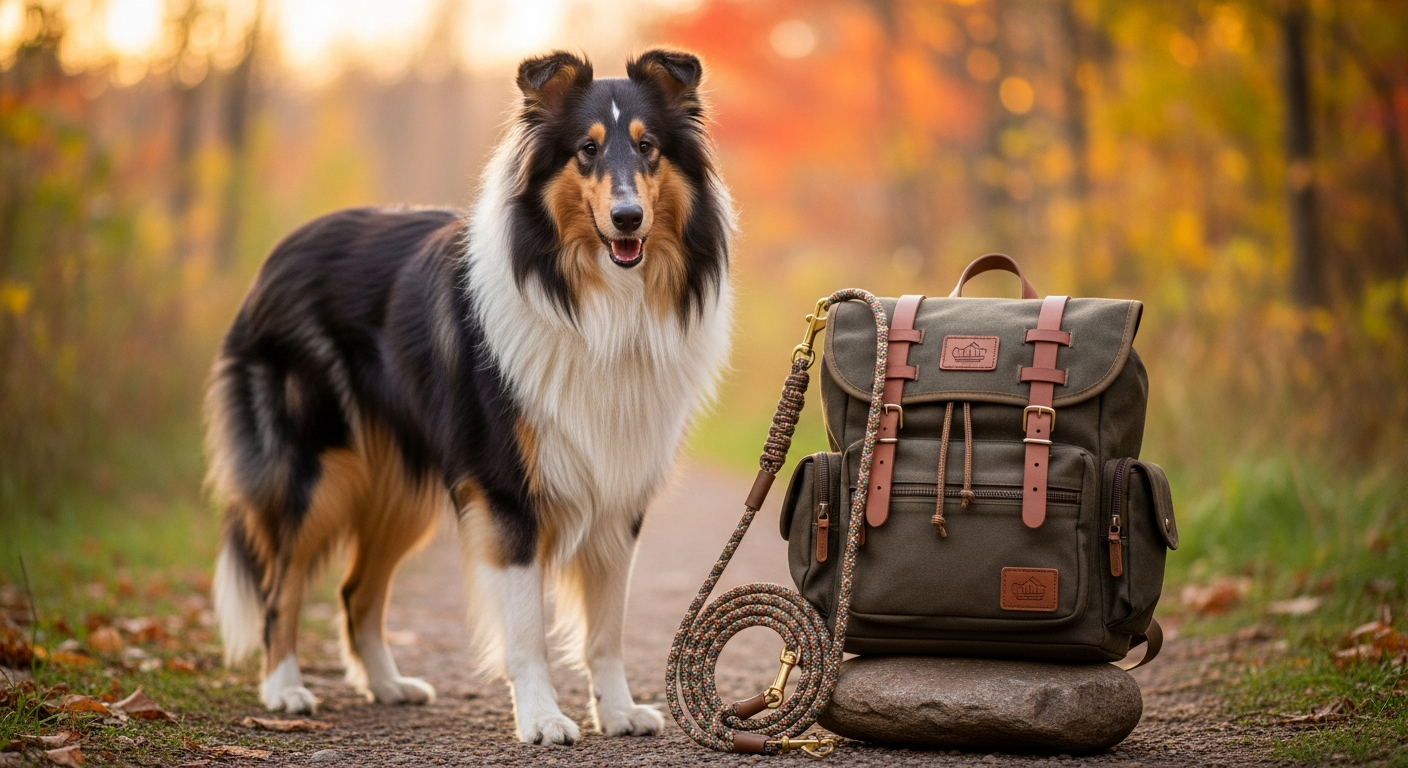
Cooper and I hiked the Ice Age Trail segment through Devil’s Lake last fall and the 10-mile loop around Lake Geneva three weeks later. We have also hit Rocky Mountain National Park twice, once in summer and once in shoulder season. Over three years of hiking together I have burned through two harnesses, three sets of paw protection, and about six different dog packs. This is what has actually held up on real trails, and what has failed in ways I could not have predicted from the product description.
The Short Version
If you have a Collie or any long-coated herding breed and you hike regularly, I recommend:
- Harness: Ruffwear Front Range (day hikes) or Ruffwear Web Master (anything with scrambles or technical terrain)
- Dog pack: Ruffwear Palisades if your dog hikes 10+ miles a season, otherwise skip the pack
- Boots: Ruffwear Grip Trex only, and only if you actually need them
- Safety: Lighted collar (Nite Ize NiteDog) + dog-specific first aid kit
Below is the detail on why these, and what failed.
Harness Review
The Front Range is the harness I reach for 80 percent of the time. It is well-padded, easy to put on, and the shoulder yoke fits a Collie’s deep chest without riding up. The rear clip point is strong, and the front clip is useful for leash-reactive dogs. After two full seasons of trail use, mine has one small tear in the chest webbing but still holds firm. The $50 price is honestly fair.
The Web Master is the upgrade I recommend for anything involving actual scrambles. It has a handle that lets you lift your dog over obstacles without putting stress on the neck. My Cooper has been hoisted over three rockfalls on Rocky Mountain trails with this harness and it has never slipped. At $75 it is a meaningful jump in price, but it is the right tool for rough terrain.
Two harnesses I strongly advise against: any Amazon no-name harness, and the Kurgo Journey. The Amazon options fail at the buckles within one season. The Kurgo Journey is fine for flat walks but the chest strap rides up on long-coated dogs, which is a real problem when you are 4 miles from your car.
The AKC’s hiking safety checklist covers the basics of harness fit that every owner should read before heading out.
Dog Pack Review: Worth It or Gimmick?
Here is the honest answer: most dogs do not need to carry a pack. If your hikes are under 5 miles and you are comfortable carrying water and snacks for your dog, skip the pack entirely. Dog packs add weight and heat, and for a Collie whose heat tolerance is already marginal, that matters.
If you hike 8 to 15 miles regularly and you have a structurally sound adult dog (ideally over 2 years old), a properly fitted pack lets your dog carry water, snacks, and waste bags. The Ruffwear Palisades ($150) is the only pack I trust for this. The suspension distributes weight evenly, the saddlebags are stable at speed, and the construction has survived abrasion against rocks that would have shredded cheaper packs.
Cooper carries 1 liter of water and a snack bag for trips over 6 miles. I monitor him for lagging, excess panting, or posture changes and unload the pack if anything looks off. A 2021 study in Applied Animal Behaviour Science noted that dogs carrying loads over 10 percent of body weight showed measurable gait changes, which is why I keep his load well under that threshold. A 55-pound Collie carrying under 5 pounds is a reasonable upper limit.
Paw Protection Reality Check
Dog boots are one of the most oversold product categories in the hiking gear space. For the vast majority of trail hiking, you do not need boots. You need to condition your dog’s paws gradually and avoid specific known hazards (hot asphalt, glass, cactus country, long stretches of sharp gravel).
When you actually need boots:
- Snow longer than about 20 minutes of exposure
- Very hot surfaces (asphalt above 125 F or so)
- Known rocky terrain with sharp edges (granite scree, some desert trails)
- Post-injury protection during healing
The Ruffwear Grip Trex ($90 for a set of 4) is the only boot I have found that stays on a moving Collie for more than 5 minutes. The Vibram sole grips real terrain. Cheaper rubber boots come off within a mile of trail use, which is worse than no boots at all because you might not notice until one is gone.
For grooming care specific to the long-coated herding breeds I cover, the tools I use are reviewed in our undercoat tool guide.
Safety and Visibility
Every dog on a trail should be visible in low light. I learned this the hard way when Cooper and I got caught out on a trail 45 minutes past sunset and I realized I could not see him 20 feet ahead. Since then he wears a Nite Ize NiteDog Rechargeable LED Collar over his regular collar on every sunset or pre-dawn hike. At $20 it is one of the best gear dollars I have ever spent.
A dog-specific first aid kit is non-negotiable for any hike beyond a neighborhood walk. The Adventure Medical Kits Trail Dog kit ($40) includes a muzzle (for use on a dog in severe pain), styptic powder, hemostat, and self-adhering bandage in a compact form factor. The contents are chosen well for common trail injuries. The American Veterinary Medical Association’s pet first aid supplies checklist is a good sanity check for what you actually need to carry.
Hydration Gear
Collapsible silicone bowls are cheap and effective. The Ruffwear Bivy Bowl ($15) holds a half liter and clips to a pack strap, which is about all you need. For long hikes I carry a 1.5-liter Platypus reservoir dedicated to the dog, separate from my own water. Having a shared water bottle is fine for a short hike but becomes a risk factor on a long one because if one of us spills or contaminates it, both of us are out of water.
What I Stopped Buying
After three years of iteration, here are the categories I have abandoned:
- Raincoats for hiking. Collies have weatherproof coats; a raincoat adds weight and reduces ventilation more than it keeps them dry.
- Cooling collars. None of them actually cool meaningfully. A bandana in cold water does more.
- Reflective vests. The lighted collar does the job better at 20 percent of the bulk.
- Dog-specific sunscreen. For Collies, proper shade management is more practical than chasing nose-area UV. If your dog has significant pink skin exposure, that is a different conversation.
For seasonally targeted gear, our summer cooling gear review and winter essentials articles cover what I rotate through the year.
Bottom Line
Spending $300 on a Ruffwear Front Range, Palisades pack (if you need it), Grip Trex boots for specific conditions, a NiteDog collar, and a trail first aid kit will cover 95 percent of what a Collie hiking owner actually needs. Everything beyond that is either specialty gear or marketing. The rest of your budget should go toward conditioning, trail time, and a good vet who knows your dog.
My goal with this blog is not to push products. It is to save you from the mistakes I already made. If a piece of gear is not on my list, there is probably a reason, and I would rather tell you than let you find out on mile 9 of a hike with your dog.